Overheard at the Furmeet

Furries talking about current events.

It seems on the day the Chicago Cubs clinched a spot in the National League playoffs, it’s rumored that season ticket holders are more than likely to let their tickets go for the $7,000 asking price as some have posted on ebay.

Having a chat with those who actually been to Rainfurrest, you hear something although I would say rumored may be the root cause for all the trouble there. It seems Rainfurrest was mismanaged, the staff having fun rather than doing it’s job. But the biggest news was it’s subtitle Fetish Con. Where all sorts of fetishes were talked about openly and frankly in the panels, and no one was checking the badges to see if anyone was underage. I was pacifically told, you rarely ever saw a staff member. Other than at Registration.

It seems Midwest Furfest has a Staff photographer and I had a chance to speak to him yesterday. The first thing I asked was about those seemly professional photographers and videographers you see in and around the con. To my surprise they don’t work for the con. Surprisingly enough they do it because they want to. It also seems what they shoot usually wind up on Reddit or other sites where you can post High Quality Video,

Now here is one of the biggest scoops I ever posted. It seems there are plans in the works, for this same staff photographer to post “Live” photos to Midwest Furfest Instagram account.

Also that all the hotels around the fur con are already booked solid for the 1st weekend in Dec. It also seems worth mentioning that more than a few on social media posted they were not going to go to Anthrocon, but instead got to MFF. By the way Anthrocon’s numbers still topped 6300.

Every LGBTQ+ Person Should Read This by Sarah Prager

as originally posted on Huffington Post

Dearest Queer Person,

Chances are you don’t even know that you are holy, or royal or magic, but you are. You are part of an adoptive family going back through every generation of human existence.

Long before you were born, our people were inventing incredible things. Gifted minds like the inventor of the computer Alan Turing and aviation pioneer Alberto Santos-Dumont live on in you. The imprint that bold and brilliant individuals like Lynn Conway and Martine Rothblatt (both transgender women alive today) made on modern technology is impossible deny as present-day engineers carry their torch in the creation of robots and microprocessors. More recently speaking, one of the co-founders of Facebook publicly acknowledged his identity as a gay man, as did the current CEO of Apple.

We were so often gods and goddesses over the centuries, like Hermaphrodite (the child of Hermes and Aphrodite), and Athena and Zeus, both of whom had same-sex lovers. In Japan it was said that the male couple Shinu No Hafuri and Ama No Hafuri, “introduced” homosexuality to the world. The ability to change one’s gender or to claim an identity that encompasses two genders is common amongst Hindu deities. The being said to have created the Dahomey (a kingdom in the area now known as Benin) was reportedly formed when a twin brother and sister (the sun and the moon) combined into one being who might now identify as “intersex.” Likewise, the aboriginal Australian rainbow serpent-gods Ungud and Angamunggi possess many characteristics that mirror present-day definitions of transgender identity.

Our ability to transcend gender binaries and cross gender boundaries was seen as a special gift. We were honored with special cultural roles, often becoming shamans, healers and leaders in societies around the globe. The Native Americans of the Santa Barbara region called us “jewels.” Our records from the Europeans who wrote of their encounters with Two-Spirit people indicates that same-sex sexual activity or non-gender binary identities were part of the culture of eighty-eight different Native American tribes, including the Apache, Aztec, Cheyenne, Crow, Maya and Navajo. Without written records we can’t know the rest, but we know we were a part of most if not all peoples in the Americas.

Your ancestors were royalty like Queen Christina of Sweden, who not only refused to marry a man (thereby giving up her claim to the throne), but adopted a male name and set out on horseback to explore Europe alone. Her tutor once said the queen was “not at all like a female.” Your heritage also includes the ruler Nzinga of the Ndongo and Matamna Kingdoms (now known as Angola), who was perceived to be biologically female but dressed as male, kept a harem of young men dressed in traditionally-female attire and was addressed as “King.” Emperors like Elagalabus are part of your cultural lineage, too. He held marriage ceremonies to both male-identified and female-identified spouses, and was known to proposition men while he was heavily made-up with cosmetics. Caliphs of Cordoba including Hisham II, Abd-ar-Rahman III and Al-Hakam II kept male harems (sometimes in addition to female harems, sometimes in place of them). Emperor Ai of Han Dynasty China was the one whose life gives us the phrase “the passions of the cut sleeve,” because when he was asleep with his beloved, Dong Xian, and awoke to leave, he cut off the sleeve of his robe rather than wake his lover.

You are descended from individuals whose mark on the arts is impossible to ignore. These influential creators include composers like Tchaikovsky, painters like Leonardo da Vinci and actors like Greta Garbo. Your forebears painted the Sistine Chapel, recorded the first blues song and won countless Oscars. They were poets, and dancers and photographers. Queer people have contributed so much to the arts that there’s an entire guided tour dedicated just to these artists at New York’s Museum of Modern Art.

You have the blood of great warriors, like the Amazons, those female-bodied people who took on roles of protection and had scarce time or interest between their brave acts to cater to the needs of men. And your heart beats as bravely as the men of the Sacred Band of Thebes, a group of 150 male-male couples who, in the 4th century B.C.E., were known to be especially powerful fighters because each man fought as though he was fighting for the life of his lover (which he was). But your heritage also includes peacemakers, like Bayard Rustin, a non-violent gay architect of the Black civil rights movement in the U.S.

We redefined words like bear, butch, otter, queen and femme, and created new terms like drag queen, twink and genderqueer. But just because the words like homosexual, bisexual, transgender, intersex and asexual, have been created in the relatively recent past doesn’t mean they are anything new. Before we started using today’s terms, we were Winkte to the Ogala, A-go-kwe to the Chippewa, Ko’thlama to the Zuni, Machi to the Mapuchi, Tsecats to the Manghabei, Omasenge to the Ambo and Achnutschik to the Konyaga across the continents. While none of these terms identically mirror their more modern counterparts, all refer to some aspect of, or identity related to, same-gender love, same-sex sex or crossing genders.

You are normal. You are not a creation of the modern age. Your identity is not a “trend” or a “fad.” Almost every country has a recorded history of people whose identities and behaviors bear close resemblance to what we’d today call bisexuality, homosexuality, transgender identity, intersexuality, asexuality and more. Remember: the way Western culture today has constructed gender and sexuality is not the way it’s always been. Many cultures from Papua New Guinea to Peru accepted male-male sex as a part of ritual or routine; some of these societies believed that the transmission of semen from one man to another would make the recipient stronger. In the past, we often didn’t need certain words for the same-sex attracted, those of non-binary gender and others who did not conform to cultural expectations of their biological sex or perceived gender because they were not as unusual as we might today assume they were.

Being so unique and powerful has sometimes made others afraid of us. They arrested and tortured and murdered us. We are still executed by governments and individuals today in societies where we were once accepted us as important and equal members of society. They now tell us “homosexuality is un-African” and “there are no homosexuals in Iran.” You, and we, know that these defensive comments are not true–but they still hurt. So, when others gave us names like queer and dyke, we reclaimed them. When they said we were recruiting children, we said “I’m here to recruit you!” When they put pink and black triangles on our uniforms in the concentration camps, we made them pride symbols.

Those who challenge our unapologetic presence in today’s cultures, who try to deprive us of our rights, who make us targets of violence, remain ignorant of the fact that they, not us, are the historical anomaly. For much of recorded history, persecuting individuals who transgressed their culture’s norms of gender and sexuality was frowned upon at worst and unheard of at best. Today, the people who continue to harass us attempt to justify their cruel campaigns by claiming that they are defending “traditional” values. But nothing could be further from the truth.

But now you know they are wrong. Just imagine the world without that first computer or the Sistine Chapel’s ceiling, or a huge part of the music you’ve ever heard from classical Appalachian Spring to classic YMCA (I mean, we’ve held titles from the “Mother of Blues” to the “King of Latin Pop!”). How much less colorful would the world be without us? I’m grateful that you’re here to help carry on our traditions.

So, happy LGBT History Month! I hope to celebrate with you here at Quist. This list of LGBTQ history online resources is a good place to start in exploring more specifics about this heritage.

Lesbianamente*,
Sarah Prager

*Actually a term as a way someone signed a letter for a lesbian organization in Mexico decades ago!

What Really Happened at Rainfurrest

According to one report:

Rainfurrest had its annual convention just a few weeks ago and word coming out is that things went wrong-way wrong with it. A small group of congoers caused major havoc by doing such things as clogging up a spa with towels and causing hundreds of thousands of dollars in damages. Things went so sour, in fact that the hotel cancelled the contract that Rainfurrest had signed for its 2016 convention and now the convention has to find a new venue to hold its convention.

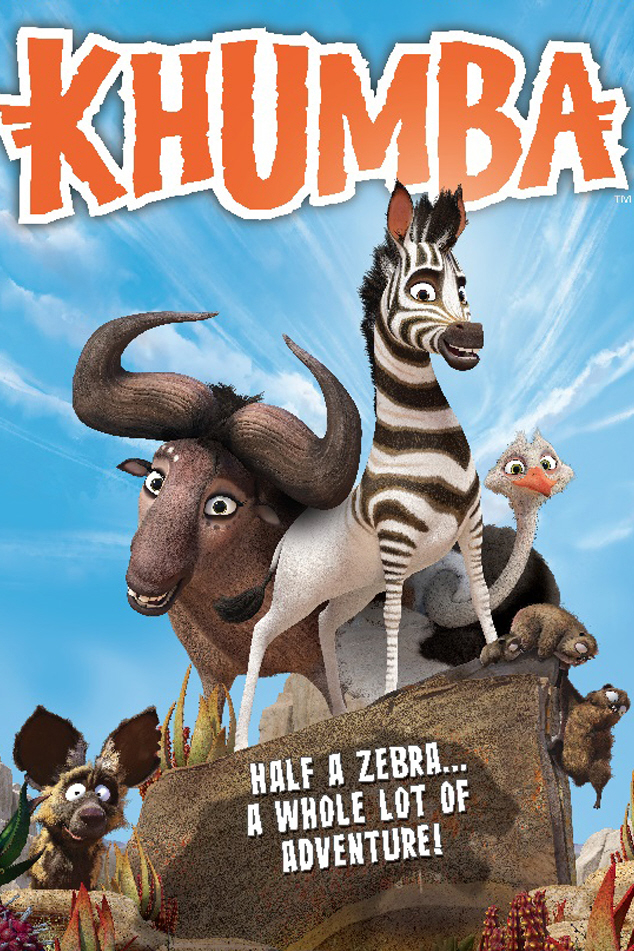
Khumba (film) review

Khumba

I first learned about Khumba in the weirdest way possible…and that is through a furry music video, pacifically one by Ibolt. The video itself is a good one, but what intrigued me was the song ‘The Real Me”. Standard searches did not match anything save for You Tube video that was when I discovered the song was sung by Loyiso Barr, a South African singer, which he performed for the South African animated movie Khumba. After seeing the trailer I found the plot intriguing. A half striped zebra born to a heard that guards it’s merger water supply with a ring of thorn bushes. Because Khumba is half striped the heard blames him for why there is no rain. That and having his mother die, plus a mathis giving him the map to a magic spring where he could get his stripes and bring the rains back. Is more than a little interesting to me.

I was very lucky to find a copy of the DVD at my local Target for $5.

Once I popped the DVD in to my player I was drawn in to a world that I didn’t know.

Look here in America we get a lot of American or European version of what they think. But to see the real thing created by those who live there. It was like stepping into an alien world…and best of all you didn’t want to leave.

Once Khumba starts to explore his world. That is where the magic begins. The character ranging from a wild dog, whose pack doesn’t respect there leader, an ostrich who loves ballet, and an over protective female water buffalo you are hooked.

There is a villain to this piece his name is Phango voiced by Liam Neeson. A one eyed leopard who is so determined to fulfill the prophesy of when a leopard confronts a half striped zebra, the winner shall become invincible. That he killed his entire pack so he could be the winner of that battle. Truly one of the 10 best animated villains of all time.

Like any good folk tale, Khumba is filled with marvelous characters, interesting friendships, when the wild dog I mentioned befriends a sheep.

Khumba is worth it, if you love good stories and something different go buy Khumba you will thank me later.

My score 9.5 paws out of 10

TALKING ANIMALS AND DRESSED BEASTS: THE ANTHROPOMORPHIC STORIES OF C.S. LEWIS by Kurt Wilcken

as originally posted on greyhavensgroup

He was born Clive Staples Lewis, a name not quite as ghastly as “Eustace Clarence Scrubb” but bad enough that he preferred to be called Jack. In his lifetime he wrote a remarkable variety of books: from children’s stories to literary criticism, and from science fiction to popular theology. He advocated Christianity in an age which regarded Christ as a fairy tale and advocated fairy tales in an age which regarded such stories as fit only for children. In doing so, his entire work became a refutation of the heresy that God is an enemy of the imagination. He also had a deep love of animals. He is perhaps best known for his Narnia books, but the theme of talking animals runs through much of his work.

Lewis started writing young. As a child in Belfast in the early 1900’s, he was not allowed to play outside on wet days. His parents were justifiably worried about their children developing tuberculosis so both Jack and his older brother Warren were dragged inside at the least sign of rain. Jack spent much of those rainy days at a small table, made specially for him, drawing pictures and writing stories about them.

The pictures came first. Later, when asked how he came to write the Narnia books, he said:

“[They] began with seeing a series of pictures in my head. At first they were not a story, just pictures. The Lion [the Witch and the Wardrobe] all began with a picture of a Faun carrying an umbrella and parcels in a snowy wood. This picture had been in my mind since I was about sixteen. Then one day when I was about forty, I said to myself, ‘Let’s try and make a story about it.’ ”

At the time Jack was interested in “dressed animals” and knights in armor and the pictures he drew and the stories that grew out of them took the form of chivalrous rabbits and mice doing battle with villainous cats. These crusader mice may have been the inspiration behind one of the best characters in his later Narnia books, the valiant mouse Reepicheep.

Jack’s early drawings were about the usual for an eight-year-old interested in knights and mice, but as he grew older his sketches became more sophisticated. With a little formal art instruction, Lewis may have become a competent draftsman along with his other accomplishments. As it was, his illustrations of modern-day Animal-Land (to me at least) seem weirdly reminiscent of Art Spiegelman’s Maus. Lewis didn’t think much of his own drawing ability. Years later in a letter to his goddaughter he wrote:

“I can only draw a cat from the back view like this [he draws a cat]. I think it is rather cheating, don’t you? because it does not show the face which is the most difficult part to do. It is a funny thing that faces of people [he draws examples] are easier to do than most animal’s faces except perhaps [another sketch] elephants and owls [sketch].”

One of the earliest stories is a play about one of the early kings of Animal-Land, King Benjamin I. The medieval setting of the play and the language the characters speak make it clear Lewis was trying to imitate Shakespearean drama; an ambitious task for an eight-year-old.

Benjamin I was a bunny and like other monarchs of Animal-Land bearing that name, he was based on a toy rabbit Jack owned. Many of Jack and Warnie’s toys became characters in Animal-Land including the chess set; the Chessmen were something of a persecuted minority in Animal-land and lived in separate castles called Chesseries.

When Jack’s brother Warren came home from school, Animal-Land underwent a change. Warnie was interested in steamships and railways and especially in India. The two boys then created a joint fantasy world by removing the entire Indian subcontinent right off of Asia and placing it just off the coast of Animal-Land and by joining the two countries into a single state called Boxen.

Even as a child Lewis had a strong sense of what comics fans call “continuity.” Having decided that his earlier chivalric stories took place in the same world as Boxen but at an earlier time, he began constructing a history of Animal-Land from its primitive past through its union with India to the present day. He later wrote:

“…I never succeeded in bringing it down to modern time; centuries take a great deal of filling when all the events have to come out of the historian’s head… There was soon a map of Animal-Land — several maps, all tolerably consistent… And those parts of that world which we regarded as our own — Animal-Land and India — were increasingly peopled with consistent characters.”

Boxen was ruled jointly by King Benjamin VII of Animal-Land and Rajah Hawki V of India; a fun-loving pair who seem to have been modeled after the playboy Prince Edward who had become King of England not that long before. They were advised and to a good extent dominated by their old tutor, a frog named Lord Big. Lord Big held the position of “Little-Master” and was sort of a prime minister for life. Lord Big had many qualities in common with Lewis’ father, particularly a passion for oratory. Lewis himself later described Big as “…in many ways a prophetic portrait of Sir Winston Churchill.”

The citizens of Boxen seem to have been incredibly preoccupied by politics. Jack’s first “novel”, Boxen, or Scenes from Boxoinan Life, consists entirely of political maneuvering by a parrot named Polonius Green (wonderful name!) to gain a seat of the “clique”, a sort of ruling committee in the Boxonian Parliment. As an adult, Lewis came to hate politics, but as a ten-year-old wishing to write about adult-type stuff, politics seemed an appropriate subject. In a later essay he wrote:

“When I was ten I read fairy tales in secret and would have been ashamed if I had been found doing so. Now that I am fifty I read them openly. When I became a man I put away childish things, including the fear of childishness and the desire to be very grown up.”

At this point however his ideas about what constituted being “grown up” was influenced by his father’s friends and their unending political discussions.

Despite the Boxonians’ political rivalries, everyone seems to be on amicable terms with each other. James Orring, the lizard who leads the Opposition Party, conspires with the Prussians to unseat the ruling clique. Yet he isn’t a bad sort, and one can feel sorry for him when Green and the Prussians double-cross him. Mr. Bar, a lazy and mischievous bear, is a troublemaker, but the worst of his villainy is to buy five hundred golf balls at Lord Big’s expense and have them stuffed in Big’s mattress. Viscount Puddiphat, an owl who runs a successful string of music halls, remains close friends with people on all sides of every political quarrel. The only character who seems to be universally disliked is Polonius Green and that is not because he is wicked as much as because he is such a colossal boor.

When Warnie returned to school the adventures in Boxen continued in their correspondence and Jack’s letters often included updated current events.

“My dear Warnie. I am sorry that i did not write to you before. At present Boxen is SLIGHTLY (?) convulsed. The news has just reached us that King Bunny is a prisoner. The colonists (who are of course the war party) are in a bad way; they dare scarcely leave their houses because of the mobs. In Tarato the Prussians and Boxonians are at fearful odds against each other and the natives. Such was the state of affairs recently: but the General Quicksteppe is taking steps to rescue King Bunny. (The news somewhat pacified the rioters.) Your loving brother, Jacks.”

When he became old enough Jack joined Warnie at Wynyard School in Watford, Hertfordshire. They began a Boxonian newspaper, The Murray Chronicle (after the capital of Animal-Land), and later the Murray Evening Telegraph. Boxen was one of the few bright spots of the boys’ early years in school; Wynyard was a dismal place full of bullies and boredom. The headmaster was later found mad and was committed. What little education the boys received was limited to what Lewis later described as “…a shoreless ocean of arithmetic… and algebra!”

Jack left Wynyard and left Boxen behind too. As a teenager he had the good fortune to be tutored by W.T. Kirkpatrick, a brilliant teacher who inspired him and instilled in him a vigorous appreciation for logic.

His interests returned to fantasy when as a young man he discovered the novels of George MacDonald. MacDonald was a Victorian writer of fantastic literature with a strongly Christian perspective and although at the time Lewis was an atheist, he later said that MacDonald’s stories “baptized my imagination.” Later at Oxford he met and became friends with another corrupting Christian influence, J.R.R. Tolkien, who was starting up a small group to read Icelandic sagas to each other.

At this point Lewis underwent probably the most important turning point in his life. Lewis loved these old Norse and Teutonic myths and Tolkien suggested that the awe and the power and the magic he sensed in them was something that found actuality in the “true myth” of Jesus. Paradoxically, Lewis’ love of the old pagan myths and his rigorous application of twentieth-century rationalism and logic combined to persuade him to convert to Christianity.

Tolkien also influenced Lewis’ interest in fantasy. Like Tolkien, Lewis felt that there was nothing innately childish about fairy-tales and that the twentieth-century tendency to link them with children was due more to fashion than to substance.

“The whole association of fairy tale and fantasy with childhood is local and accidental. I hope everyone has read Tolkien’s essay on fairy tales, which is perhaps the most important contribution to the subject that anyone has yet made. If so, you will know already that, in most places and times, the fairy tale has not been specially made for, nor exclusively enjoyed by, children. It has gravitated to the nursery when it became unfashionable in literary circles, just as unfashionable furniture gravitated to the nursery in Victorian houses.”

He also recognized anthropomorphic animals as a special feature occurring only in fantasy literature having special qualities which more realistic forms of fiction lacked.

[One feature of fairy tales is] …the presence of beings other than human which yet behave, in varying degrees, humanly; the giants and dwarfs and talking beasts. I believe these to be at least (for they have many other sources of power and beauty) an admirable hieroglyphic which conveys psychology, types of character, more briefly than novelistic presentation and to whom novelistic presentation could not yet reach. Consider Mr. Badger in The Wind In The Willows — that extraordinary amalgam of high rank, coarse manners, gruffness, shyness, and goodness. The child who has once met Mr. Badger has ever afterwards, in its bones, a knowledge of humanity and of English social history which it could not get in any other way.

In another essay, Lewis writes:

Does anyone believe that Kenneth Grahame made an arbitrary choice when he gave his principal character the form of a toad, or that a stag, a pigeon, a lion, would have done as well? …Looking at the creature we see, isolated and fixed, an aspect of human vanity in its funniest and most pardonable form…

Lewis felt that anthropomorphic animals should not overlook their animal natures. In a letter to a child who had sent him a story to critique he stresses this.

The main fault of the animal [story] is that you don’t quite mix the reality and the fantasy quite in the right way. One way is Beatrix Potter’s or Brer Rabbit’s. By fantasy the animals are allowed to talk and behave in many ways like humans. But their relations to one another and to us remain the real ones. Rabbits are always in danger from foxes and men. The other way is mine: you go right out of this world into a different creation, where there are a different sort of animals. Yours are all in the real world with a real eclipse. But they don’t have the real relations to one another — real small animals w[oul]d. not be friends with an owl, nor w[oul]d. it know more astronomy than they!

In another letter discussing a theological point he writes:

…part of the excellence of a good man is that he is not an angel, and of a good dog that it is not a man.

In his Narnia books Lewis was careful to give his talking beasts qualities consistent with what kind of creatures they were.

Lewis incorporated some of his ideas on talking animals into his first science fiction novel, Out of the Silent Planet. He had written it as a bargain with Tolkien that each would try a science fiction story and he based his main character, Dr. Elwin Ransom, on Tolkien. Ransom, a philologist, is petrified at his first meeting with an alien species until he realizes that the creature is talking.

A new world he had already seen — but a new, an extraterrestrial, a nonhuman language was a different matter… In the fraction of a second which it took Ransom to decide that the creature was really talking, and while he still knew that he might be facing instant death, his imagination had leapt over every fear and hope and probability of his situation to follow the dazzling project of making a Malacandrian grammar.

The hross, one of the three races on the planet Malacandra, is a good example of a nonhuman being which behaves to a certain degree humanly. Later on Ransom muses:

…the rationality of the hross tempted you to think of it as a man. Then it became abominable — a man seven feet high, with a snaky body, covered, face and all, with thick black animal hair, and whiskered like a cat. But starting from the other end you had an animal with everything an animal should have — glossy coat, liquid eye, sweet breath and whitest teeth — and added to all these, as though Paradise had never been lost and earliest dreams were true, the charm of speech and reason. Nothing could be more disgusting than the one impression; nothing more delightful than the other. It all depended on the point of view.

Malacandra has three different sentient races, giving a perspective humans seem to lack.

“Your thought must be at the mercy of your blood,” one Malacandran comments to Ransom. “For you cannot compare it with thought that floats on a different blood.” Thus the talking beasts have another charm: they jar us from our anthrocentric perspective by showing us a different way of thinking.

Lewis does this in the third book of his Ransom trilogy, That Hideous Strength. Ransom’s home has become something of a menagerie and one of the creatures that dwells there is a bear named Mr. Bultitude. At one point in the story Lewis gives us a delightful peek into the bear’s mind as he strays out of the garden. Mr. Bultitude is by no means a talking bear, nor would we say he possesses a soul in the same way a human does; but he does have a point of view and a way of thinking and Lewis gives us a lovely guess at what his thoughts might be.

How people treat animals in That Hideous Strength is one of the outward signs revealing their character. Ransom’s home is a second Eden with beasts and men comfortably cohabitating. Even the mice are welcome to eat what crumbs they can find. By contrast, the forces of Evil in the story are represented by the National Institute of Coordinated Experiments, or N.I.C.E., whose vivisection experiments give a hint of what England will be like if their totalitarian plans succeed.

Although Lewis enjoyed some forms of science fiction and wrote about other worlds, he wasn’t really interested in the nuts and bolts of space travel. He regarded such “hard” science fiction tales as “Engineers’ Stories” and although he granted that they were a perfectly legitimate genre, he plainly stated that he personally did not care for them. “I once took a hero to Mars in a space-ship,” he once wrote, “but when I knew better I had angels convey him to Venus.” In a letter to a young girl during the early days of the space race, when the Russians had sent a dog into orbit, he wrote:

I shall be glad when people begin talking about other things than Sputniks, won’t you? One gets quite sick of the whole subject. The pity is that some cosmic rays don’t produce a mutation in the dog which would have made it super-rational: then it might have found its way back alive and started taking revenge on the humans!

What an idea! If only Stan Lee had thought of that, the history of comics might have been changed and anthropomorphics might have become mainstream!

Lewis worked his deep love of animals into nearly everything he wrote — including some of his purely theological works. His ultimate expression of this theme came in his creation of Narnia, a land where animals could talk and were, if not equal to humans, never the less sentient, rational beings with immortal souls just like men; where the Son of God became incarnate not as a man but as the noblest of beasts, the Lion.

Lewis occasionally alludes to the medieval belief that the human and animal races have been estranged and that before the Fall of Adam, man could speak the languages of the beasts. I think Lewis must have been charmed by this idea because so many of the animals in his writings are talking beasts and even the mute ones have something to say.

This article released under a Creative Commons BY-NC-SA 3.0 license

OKlacon is Gone is Rainfurrest Next

Read this open letter to attendees to Rainfurrest

Dear RainFurrest attendees,

We need to talk. This isn’t going to be easy or pleasant, but it’s very important for the convention and for the community. We’re entering a critical phase in RainFurrest’s history. This is our tenth year, a major milestone for any event, and while we’d love to say right here and now that we’re ready to bring the convention to you for another ten years, we need to talk about where we are right now.

By every count, 2015 should have been our best RainFurrest ever. We raised over ten thousand dollars for charity. We hosted eight book launches for members of the fandom. Our registration line never exceeded fifteen minutes during the entire convention. We had so many panel suggestions that we couldn’t fill them all. We had another year of record attendance, bringing together 2,704 attendees to Seattle, almost all of whom who had a wonderful time and had no trouble following the rules.

However, it’s that “almost” that concerns us. We had to pull five badges this year. That’s more than we’ve ever had to pull in any other year of RF’s history, possibly more than every other year. We try everything we can to manage incidents without resorting to ejecting people, but we were forced into our last-resort option five times this year, and that’s not counting the attendees evicted by the Hilton itself.

This alone would be bad news for RainFurrest, but there’s even more.

For the last few years, the Hilton sustained more damage during RainFurrest than it did from every other event at the Hilton the entire rest of the year. This doesn’t even include damage to guest rooms or other incidental wear and tear like the elevators.
This year’s incidents include two plumber calls, a flooded bathroom that soaked the offices underneath, towels stuffed into a hot tub pump, and multiple petty vandalisms and thefts. A final damage report is still being compiled.
We had to send three people to the hospital and call the police twice.
By Sunday morning of con this year, the hotel was so exasperated that they were threatening to evict attendees for single noise complaints.
RainFurrest is a large event. A few incidents are inevitable, and most of those are no big deal; the Hilton understands conventions and they’ve been willing to work with us. Most of the above, however, were completely avoidable, and they’re beyond the scope of “a good time.”

Right now, we’re in trouble. There’s no sugar coating it. Our ability to hold this event is in jeopardy. The Hilton is not happy with us. Next year’s contract is already signed and the convention will happen, but 2017 and beyond hinges on what happens in 2016. We’re doing what we can to keep the worst from happening, but the convention is going to have to grow, and we’re going to need your help to do it.

We can’t make these changes without you. We can’t be everywhere and we can’t see everything. We’re asking you, all of you, to step forward and help make RainFurrest a better convention. We understand that the problems are coming from less than two-tenths of a percent of the attendees, but they impact everyone who attends, and that’s why we’re asking for your help. If you see damage or vandalism, please tell a staffer and the hotel. If you’re not sure if something’s out of the ordinary, please come ask us. If you’re uncomfortable talking to us directly, you can contact us anonymously. Your voice is important. Con staff and the hotel will listen to you, just as your fellow attendees should.

We know that people come to conventions to have a good time, and we want to facilitate that, but a few people’s fun has gotten way out of hand. On behalf of everyone who comes to RainFurrest, we’re asking you to please help us raise the standards of the convention. Speak up and be a voice for better behavior. If we don’t start taking better care of our hotel, we’ll lose access to it, and then nobody gets to have fun at RainFurrest any more.

— Rex Wolf, RainFurrest 2015 Chair

Patreon Hacked

as originally posted on arstechnica.com

Hackers have published almost 15 gigabytes’ worth of password data, donation records, and source code taken during the recent hack of the Patreon funding website.

FURTHER READING

PATREON: SOME USER NAMES, E-MAIL AND MAILING ADDRESSES STOLEN
At least passwords were encrypted with 2048-bit RSA, hashed via bcrypt, and salted.
The data has been circulating in various online locations and was reposted here by someone who said it wasn’t immediately possible to confirm the authenticity of the data. Security researcher Troy Hunt has since downloaded the archive file, inspected its contents, and concluded that they almost certainly came from Patreon servers. He said the amount and type of data posted by the hackers suggest the breach was more extensive and potentially damaging to users than he previously assumed.
“The fact that source code exists … is interesting [and] suggests much more than just a typical SQL injection attack and points to a broader compromise,” he told Ars. Referring to the inclusion of a 13.7-gigabyte database, he added: “At the very least, it means mapping individuals with the Patreon campaigns they supported. There’s more data. I’ll look closer once the restore is complete.”

He said unpacking such a large archive file, sorting through its contents, and loading various MySQL database files takes time. Hunt, who maintains the widely visited have i been pwned? website, said he expected to index affected e-mail addresses on the service as soon as possible. Update 1: Hunt has now been able to sift through the data and has found 2.3 million unique e-mail addresses, including his own.

FURTHER READING

ONCE SEEN AS BULLETPROOF, 11 MILLION+ ASHLEY MADISON PASSWORDS ALREADY CRACKED
Programming errors make 15.26 million accounts orders of magnitude faster to crack.
According to Patreon officials, user passwords were cryptographically protected using bcrypt, a hashing function that’s extremely slow and computationally demanding to use. Its use was one of the saving graces of the breach, since it meant crackers would have to devote vast amounts of time and resources to crack the hashes. With the inclusion of source code, however, it’s possible crackers may find programming mistakes that could significantly accelerate the process. That’s precisely what crackers did last month to bcrypt-hashed password data taken during the hack of the cheaters dating website Ashley Madison. Access to the source code may also expose the encryption key said to protect social security numbers and tax IDs.
Hunt isn’t the only one to view the contents. Several people have posted screenshots of the purported Patreon data on social media sites, including the image included at the top of this post. If authentic, some of the contents were generated on Patreon servers as recently as September 24. As this Ars post was being prepared, a variety of Patreon subscribers, including this one, took to Twitter to say they found their e-mail addresses in the dump.

Patreon subscribers should make sure they have changed their compromised password, both on Patreon and on any other websites it may have been used. Patreon users should also be prepared for the very real possibility that anything they did on the donations site is now a permanent part of the Internet record.

Update 2: Hunt said the release appears to include the entire database taken in the hack, including a fair number of private messages sent and received by users. “Obviously all the campaigns, supporters and pledges are there too,” he wrote in one tweet. “You can determine how much those using Patreon are making.” In a separate tweet, he wrote: “The dollar figure for the Patreon campaigns isn’t the issue, it’s supporters identities, messages, etc. Everything private now public.”

Furry Chat and Roleplay’s Haven September Contest Winner Flynnfox

Flynnfox won with this great photo titled “Pizza Time”

contest winner

Fursuit with HUGE Tail

Made by Fur The Win Studios it’s the Biggest tail they ever made. 3.018 meter long and 2.18 meter circumference at the tip top. That’s roughly 10 feet long and and just over 7 feet in circumference, now get this…according to their Facebook page the tail is also a sleeping bag.12042649_920973194607068_8611837542862920336_n

12075020_920615694642818_6731116468254435946_n