
By Corgi W. as originally posted on adjectivespecies.com
Up until this point, there has been a lot of discussion around furry; on what it means to be a furry, how the identity interacts with the way we see the world, etc… However, it is often beneficial to reflect upon the things we have said, and the way in which we use words. I believe, and will attempt to show in this essay, that we hold an incomplete grasp of words within the context of furry.
I’d like to start by saying that I shall be adopting a metaphysical Externalist perspective. To begin with, I believe it is important to clarify what that means.
A metaphysical Externalist holds that for something to be a thought, it must in some way be connected and formed through an outside object. Traditionally, thought is painted in a “mental images” sort of way, but the Externalist argues against this. For example, if you want to think of a tree, then it would not be enough to simply have the image of a tree within your own mind. Instead, that image would have to come from an actual experience with trees, from which, the thought forms.
Hilary Putnam gave one such argument for this. In his essay Brains in Vats, he asks us to imagine an unlikely scenario. Imagine an ant is walking along the sand, leaving a line behind it as it goes. As it continues to walk across the sand, that line intersects with another, and another, until the ant has eventually left a perfect semblance of Winston Churchill in the sand. This image has complete likeness to the historical figure, down to the smallest detail. However, that does not mean that it is a representation of Winston Churchill.
The reason for this seems obvious; the ant has no idea who Winston Churchill is. By accident, it simply left those impressions in the sand. In order for something to be a representation as opposed to a resemblance, there must be intentionality behind it. If we draw a picture, in order for that picture to carry meaning, we must be able to grasp what it is that we are drawing in order for it to represent anything. The way in which we acquire such a grasp, however, is through experience with an external object. This is the difference between the ant scraping a resemblance in the sand, and somebody who is aware that a real Winston Churchill existed and has drawn a picture of him; one has intentionality due to knowing about Winston Churchill, and is thus able to represent him. The other does not. This same principle applies to words, too. In order for our words to mean something, they must also be about something. If I were to say “tree”, that word carries meaning due to the fact that it is able to represent the trees which I have experienced existing externally to me.
To further this point about words, there is no difference between a word written on paper or spoken, and a word in our head. Somebody could know how to respond in Japanese, for example, to other Japanese speakers, yet have no idea what the words which they say mean. They could have no clue as to how the words they said connected to the external world, and thus they would not be able to represent anything in Japanese, despite seeming to be fluent in the language. The words themselves may make sense to somebody external to the speaker, but that would not mean the speaker themselves would be aware of it. For our words to have meaning, they must connect in some way to things which are external to us.
Lets apply this to furry. When we use certain words within furry, I do not think we know what it is we are grasping at times. We may have some idea in some cases, but in many, I doubt that we have a hold of anything external.
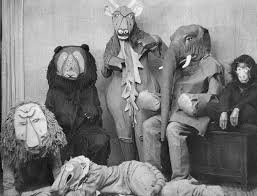
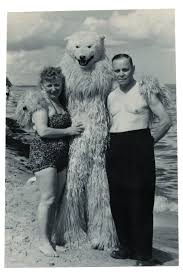
I will say that some words do definitely hold meaning in furry, before I move onto talking about how others don’t. “Fursuit” is a very good example of a meaningful word. We know what it is, we have mental imagery, we have experienced fursuits existing external to us (if even just through pictures), and we can quite easily define what they are. Thus, such a word has meaning. Oddly enough, the word “yiff” is actually one of the more meaningful words furries have; we all know what it means, and can all grasp what it represents.
However, we can then move on to more complex words. “Fursona” is particularly hard to define. We definitely know that “fursonas” exists external to us, and we have experience with something, yet it is almost impossible to put out fingers on what that is. The word “fursona” can only carry limited meaning, due to the fact that it is not clear what it represents, outside of a very broad framework. That is, not until we know what the external object we are representing with the word is.
We then move on to words that I believe are so elusive, and so difficult to define or grasp externally, they do not represent anything at all. Though controversial, “postfurry” will be my example in this article. My question to any postfurries, before they carry on with whatever they have to say, would be to explain how exactly they have been able to experience such a thing existing outside of themselves. Can anything be pointed to and have people say “that is what post-furry represents?” My argument here is not that postfurry does not exist, but that in its current state, it is not a real thought and carries no solid representation. In order to make the word mean something, then I would say that the postfurry community needs to work more on grasping what exactly it is referring to, and what it is externally.
I am not picking on postfurries, either. I believe that many words used in furry discourse suffer from not being able to grasp exactly what they are referring to.
An objection to this may be to argue that terms such as postfurry, community, etc., are subjective, and dependent upon each individual. Such a word, though, would be meaningless. Wittgenstein’s private language argument can be used here to show why.
The private language argument says that, if a word has no public use, then we cannot know if we are applying it properly. If there were a word than only one individual knew, and had no known correspondence with reality, then how could we know that such a word was used correctly? The issue is that if the word has no public use, and it is used once, we need to know that when it is used again, it refers to the same thing. If that word has no rules, and no way for it to be wrong, then it can never be used in the right way either. If a word has nothing that it represents, then it becomes a meaningless word.
If we want the word “furry” to carry meaning, we must accept that there is a correct use for it, and an incorrect use for it. Just because some people may think that it means something different, that does not mean a definition is under threat, somebody may just be wrong about it. Meaning comes from words being able to publicly represent things, if a word can mean anything, then it cannot be of any use.
Overall, I believe that this criticism can be applied to much of what has been said about furry. We, as a community, do not know what we are referring to. Many of our words carry little meaning or are vague. If the community is to have meaningful discussion and thoughts, then those discussions must use words that represent real things, and those thoughts must be actual thoughts, not just buzz words that we get into the habit of saying without understanding. This may be a large task, but it is my belief that a better grasp of our own terms – and understanding how furry actually exists – is essential if sites, such as this one, are to string together letters in such a way that they communicate representational content. This is, of course, the entire goal of our words.
This article released under a Creative Commons BY-NC-SA 3.0 license


 Furry Times