By Oxley as originally posted on adjectivespecies.com
The year is 2015, and marriage has finally been confirmed as a right for all Americans, whether gay, straight, or otherwise. Though the legislation has brought the queer community (sometimes referred to as MOGAI, or “Marginalized Orientations, Genders Alignments, and Intersex”) farther than it has ever been before in its fight for civil rights, talk of marriage now overshadows other important LGBTQ+ issues: many groups still find themselves marginalized and vulnerable in society. As the struggle slowly progresses, though, queer America has found both allies and enemies in the strangest of places. Individuals from some of the most conservative corners of politics have shown solidarity to the queer community, as have major corporations and brands. Nonetheless, their backing has often been motivated by political or economic gains—after all, in many places it would be considered political suicide to denounce marriage equality. Rather, various other communities and subcultures have often proven to be most readily and enthusiastically supportive of social progress. Countless YouTube stars have advocated for marriage equality or even used the site as a medium through which to come out, while common names in music have vehemently opposed restrictions on marriage.
Perhaps the most perplexing source of support for queerness in America, though, comes from the ever-controversial furry fandom. For years, furries have had intrinsic ties with the queer community, as only a minority within their numbers are straight. While furries as a whole have certainly never been a strong voice against equality regarding gender and sexuality, though, their advocacy of gay rights is nonetheless imperfect, and often detrimental to those who do not fit the more easily-recognized definitions of “queer”—that is to say, the transgender population. Still, observing a subcommunity as being a largely queer space offers a peculiar analysis of it, from an angle that is not often used. That said, the intersections between the queer community and the furry fandom provide a valuable insight into modern conventions of normativity, and the queer community’s interactions with society as a whole.
Queerness, like the people often described within the term, is an inherently dynamic movement. The focus, goals, and even terms associated with it are in a constant state of change—a lesbian in the early 1900s, for example, would have been referred to instead as an “invert,” while words such as “queer” itself defy concrete definition by their very nature. Needless to say, such an ever-changing culture within society has invited numerous different interpretations and reactions. Many believe that the most successful approach to the queer movement is the radical liberal stance. Operating primarily through politics, liberal queer theory seeks to affirm and verify the queer identity, while at the same time demanding equal protection under the law for all people. Such groups as the Mattachine Society worked to unite and strengthen the gay community and aid those who suffered oppression on a regular basis (Katz). The intended effect of this movement is an enhanced public visibility, in which various queer identities can exist unthreatened, combined with a strict sense of privacy to protect the lives of those considered “deviant.” These approaches have generally elicited a defensive reaction from their opposition—the queer community gained traction in the legal sense, but had little effect from a social standpoint. American society, as Lisa Duggan describes it, shifted to a sort of “No-Promo Homo” philosophy in which various queer identities are condoned and tolerated, but only so long as they are hidden away from the fragile public eye—“gay sex is fine in ‘private,’” as she explains the phenomenon, “but should not be ‘displayed’ or ‘promoted’ in public” (Duggan 181).
In contrast to the unapologetic and unabashed activism of the larger queer community, some choose to follow a more assimilationist path, seeking acceptance into conventional society by appeasing the mainstream’s aforementioned air of wariness. Known as homonormativity, this theory suggests that people of various sexualities can coexist, but only on the condition that such differences between them are never talked of. A convenient depiction of homonormativity in action is present in the repeal of the military’s previous “Don’t Ask, Don’t Tell” policy, in which gay and lesbian soldiers were permitted to serve only so long as they did not reveal their sexual orientation. Though the move to repeal the act is indeed a positive step for gay Americans, it comes with interesting implications: gay soldiers were permitted to openly serve in the military on the basis that they are exactly the same as anyone else, and do not present any real threat to society. It is, of course, worrying to suggest that anyone is inherently threatening due to their sexuality at all.
To some, this model is desirable, as it promotes a sense of equality, if only one that cannot be openly discussed, and a kind of safety in silent acceptance. Those within the queer community who seek a homonormative resolution often depict themselves as moderates—proponents of the Independent Gay Forum, for instance, are known for their opposition both to radical liberalism and reactionary conservatism in regards to the queer movement, often upholding the gay lifestyle due to its failure to present a tangible adversity to the heterosexual majority (Duggan 184-185). At first glance, it seems a viable option: those who are included in society are rarely threatened by it, nor do they threaten it in turn. However, the effect of homonormativity is not nearly so simple. Though it proposes an easy fix to the queer/anti-queer dichotomy of society by supposedly advocating for acceptance and common ground, it does so not by demanding a change within society, but demanding that the queer population find a way to “fit in,” upholding cisgender heterosexuality as the standard option. This, of course, is an inherent inaccuracy, and as argued by Adrienne Rich, poorly depicts those who do not fall within society’s narrow definition of “normal” as mere alternates to an already-present standard. Such ideologies, she asserts, are responsible for the portrayal of the lesbian identity as “the mirror image of either heterosexual or male homosexual relations,” when in fact, the culture and history that has formed the modern definition of lesbian far further separates them from other communities, however similar they may be (Rich 13). In essence, this perceived homonormativity erases the identities and humanity of all those within the queer community who fail to prove themselves to be societally sufficient.
Often, those who are cast aside in this manner are abandoned in a legal sense as well. In its simplification of sexual and gender identities, homonormative thought only grants rights to a handful of token individuals who happen to fighting for the correct rights: while the 2015 legalization of same-sex marriage is considered a giant step for the LGBTQ+ movement, it did little to protect gay and lesbian couples, or even individual people, from discrimination in areas outside of marriage, and was completely irrelevant to the struggle for trans rights, which is still ongoing. There is little attention given, as well, to the struggles of gay couples separated by prison sentences or with complications such as physical or psychological disability (Mullane). It may yet be argued that the homonormative approach does indeed seek the inclusion of once-frowned-upon individuals. Still, the concept of queer is an ever-changing one, near impossible to define with any sense of finality—inclusion of only a single group under the umbrella of “queer” inevitably leads to the exclusion of other such groups. So long as this model of inclusion-by-exclusion is followed, homonormativity will never be able to satisfy the needs and demands of the entire queer community.
Though it bears repeating that the homonormative approach to society cannot possibly hope to achieve a resolution for the queer movement, it is difficult to suggest a valid alternative. After all, homonormativity rarely concerns itself with any but the most legal and political struggles regarding gender and sexuality, while in reality, much of the oppression directed at queer individuals occurs on a societal level. It is as such that the responsibility for advancing the queer movement must be shifted away from the courtroom, and onto individual people and focused groups. No longer can it be assumed that mere laws will protect all individuals, but rather, as the voices of the queer community have been silenced, it is increasingly important to maintain this voice, as well as an active presence within the public eye. In recent decades, this goal has become perpetually easier to achieve, especially with the dawn of the Internet. Association and collaboration no longer require one’s physical presence, while simple self-expression can be broadcast and promoted to millions of people. This brave new world has empowered the queer community in a variety of ways, from allowing the quicker communication of thoughts, to aiding real-life assembly in LGBTQ+-related events. Most notably, it has also given rise to a host of new Internet-based subcultures, many of which convey an atmosphere of progressive thought and are open to less-conformist ideologies. Opinions vary by subculture, needless to say, though one in particular has proven itself to be especially affirming of the queer community.
—Enter FURRY FANDOM, stage right.
Initially conceived in internet chatrooms and sci-fi conventions as early as the late 1980s, the furry fandom has since grown into a full-blown community spanning numerous continents. Its followers—self-described “furries”—are people of all ages, fascinated at the concept of the anthropomorphic animal, each for their own unique reasons. As such creatures do not in actuality exist, the fandom relies on the Internet to sustain itself—some furries make various forms of visual art involving their creations, while others engage in activities such as roleplay. Regardless, to the furry, the connection between human and animal runs deeper than mere passing interest. Donald Jones briefly investigates their interactions in his thesis Queered Virtuality, focusing on the virtual world known as Second Life. He notes that “some view ‘furry’ as important subject position within their construction of identity,” going even so far as to describe them as “a new type of queered identity” (Jones 85).
While this statement may rationally be considered somewhat of a stretch—after all, the general disdain directed at furries nowhere near matches the oppression and discrimination faced regularly by the queer community—it is undeniable, upon further investigation, that the ties between the two groups are nonetheless intrinsic.
In early December of 2015, I conducted a poll amongst furries, primarily online and over social media, regarding such issues as sexuality and gender identity. Results and methodology are available here. Results showed that heterosexuals may actually be in the minority of the fandom, making up only 10.58 percent of respondents—less than either gay, bisexual, pansexual, or asexual responses. Meanwhile, nearly one-tenth of respondents openly identified as polyamorous. When asked a variety of questions, the vast majority of furries responded with resounding positivity regarding the mood of the fandom towards matters of queerness—most said that they were entirely accepted for their sexual orientation and were often shown support and affirmation when expressing themselves openly. As one respondent offered, “Without other furries, I don’t think I could’ve ever come to terms with my own sexuality and place in the world that my sexuality leaves me with. The furry fandom has definitely helped me in that regard.” Granted, a survey of scarcely over 400 people, conducted largely over social media—during the same weekend as a major furry convention, no less—cannot by any means be considered the end-all and be-all of demographical studies. However, it is worth noting that the results, especially regarding gender identity and sexual orientation, resemble those of other significant studies conducted within the furry fandom, including the 2013 Furry Survey conducted by [adjective][species]. Their data—conducted over a much larger group of individuals and longer period of time—also suggests a relatively even distribution of sexuality within the fandom, or at least, one that is more even than the distribution in mainstream society.
Prominent fandom member and Anthrocon CEO Dr. Samuel Conway suggests that increased queer presence in the furry fandom may be attributed to the fact that the community therein, “being open and accepting, provides a welcoming atmosphere, a safe haven that attracts people who have felt repressed,” or alternately, that “The number of homosexuals in Furry Fandom is no higher or lower than the number in a cross-section of society…it is only that here they do not feel that they must hide who and what they are” (Conway). Conway is, of course, entirely correct—though the notion is, in his own words, “pure speculation on [his] part,” the furry fandom has been known throughout the years to be incredibly and unapologetically accepting of the gay community, as well as other sexual minorities—the overwhelming majority of furries vocally and brazenly support the queer movement. Many view the furry community to be a relatively safe space for those of various sexual orientations; thus, significant proportions of the furry community directly identify with the movement.
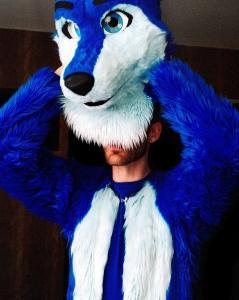
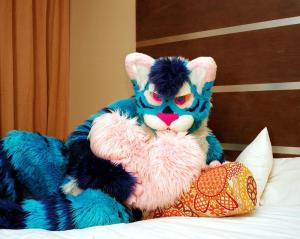
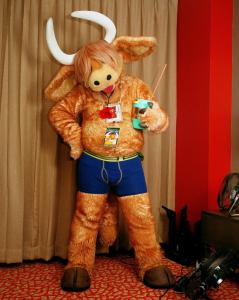
In some ways, the furry as an identity is the ultimate foil to the spread of homonormativity. Refusing to merely condone various sexual orientations, the furry community has instead proven itself to be open and affirming with an enthusiasm few other groups can exhibit. As to their voice and refusal to be silenced by homonormative conventions, there aren’t many forms of self-expression that speak louder than a giant animal costume, or “fursuit,” worn in real life by many members of the fandom at conventions and elsewhere. Furries have even branched out into other societal subcultures, joining and perpetuating queer-friendly movements and events—one notable example is HavenCon, a nascent queer-friendly video gaming convention in Austin, Texas, intrinsically connected to the furry fandom through its attendees, vendors, and promoters.
Still, despite the survey’s relatively positive feedback, a critical trend eventually unfolded. Despite the furry community’s adamant support of various sexualities, many believe it is significantly less accepting towards those of less-common gender identities. A number of respondents voiced their concern and dissatisfaction with the fandom’s treatment of trans people regarding both their sex and gender. One in particular left a powerful testament to her negative treatment as a trans woman at the hands of the fandom: “…I experience regular and frequent microaggressions from white cis and trans people within the fandom, which frequently push me into a very bad [mental] state; the closest I’d say I’ve ever come to contemplating suicide. Much of this comes from [people] who enjoy portrayals of trans bodies [in adult art] but hate us as real people of course; but a huge amount of it comes from other trans women acting what I like to call internalized transmedicalism—that is, treating trans womanhood as being automatically equated with a desire to replace a penis with a vagina, and so on.” Regretfully, the transmedicalism to which she refers is grossly problematic to the trans community, especially for those who do not want genital-reconstruction surgery, or cannot afford it—this, of course, negatively affects trans people of all walks of life, not just those within the furry fandom. The reaction that some trans people experience sans-surgery is, at best, a subdued sense of expectation from others, coupled with the assumption that they are only waiting for a surgery they have not yet had. Though surgery is a common desire within the trans community, it would be fallacious and misleading to suggest that it is universal (Allen, 103).
Equally worrying is the inherent fetishization of the transgender body from within some parts of the fandom—even worse, that such objectification should occur without any respect for real trans people. Still, trans women were not the only group that attested cases of marginalization and victimization; one agender respondent claimed that they had been told that they “do not belong in the [queer] community,” further going on to relate a number of death threats they had received from other furries, while genderqueer and genderfluid individuals also recounted cases in which others had refused to accept their gender identity as real. The same trans female respondent summarizes the situation flawlessly: “…the community at large in my experience has generally been at best tolerable, and at most horrific. It is perhaps better in some ways than cisgender hetero mainstream US society, but generally not by much unless you’re a gay man.” This is no reason, of course, for these aforementioned gay men to feel guilty for their identity—acceptance is not something to be embarrassed about, after all. Nonetheless, the apparent desire within the furry community for conventional, easy-to-understand is an undeniable sign of homonormativity.
Most troubling of all is that these incidents of transphobia within the furry fandom, numerous though isolated, seemed to have gone entirely unnoticed by nearly anyone who identified as cisgender, which is to say, those specifically who have not experienced such hostilities themselves. As mentioned, nearly all other accounts of the furry community taken through the survey were wholly positive, and expressed no indication of awareness of the struggles of some transgender furries. It is interesting to note that even Dr. Conway’s mention of the queer community stopped short at sexual preference, failing to bring up issues of gender identity despite their undeniable presence in the community. Quite possibly, this dichotomy—that is to say, the contrast between the marginalized trans/nonbinary furry and the unaware cisgender furry—is due to the fandom’s demographics. Both the more recent survey and [adjective][species]’s poll suggested that a significant majority of the fandom is composed of white, presumably cisgender males, those who are the least victimized by society, while the trans and nonbinary populations amongst furries are relatively minute. As such, it is possible that their struggles are simply less visible to the majority of the furry community. Nevertheless, the possibility still remains that the fandom is simply not as accepting as it would appear superficially. After all, furries are still human at the end of the day, and still live in a society that perpetually resists acceptance of the new and unfamiliar.
Regardless of reason, though, it is entirely plausible that the contrast between acceptance of more vocal groups and exclusion of the less well-accepted amounts to a form of homonormativity present in the furry fandom. Recent years have seen the fandom gaining traction and popularity in society, coincidentally as gay rights have advanced. It is hardly a secret that many furries wish to be more accepted for their interests in the anthropomorphic by a society that has long shunned them—the lack of acknowledgment of trans and nonbinary presence serves, to some degree, to “excuse” the fandom, making it seem less threatening to societal norms fitting its members into the narrow slot of acceptance allotted by the mainstream. Of course, it is equally conceivable that the community within the furry fandom has fallen victim to a transnormativity of sorts: as every set of data has its outliers, so too do furries, and there were indeed a small handful of trans respondents to the survey who claimed to be accepted by their furry companions, or at the very least, not aggressively contested. The situation brings up questions regarding how much of this phenomenon is the responsibility of the furry community, and how much is the result of societal influence. Due to ever-present homonormativity on a larger scale, it is much easier and safer to openly identify as gay—a slightly more condoned identity—than as trans or nonbinary. Though furries are hardly mainstream, they are also not vehemently opposed by many who lack the interest or effort to condemn them. It is likely that the same would not be true if they were as highly trans-representative as they are pro-gay.
Is it possible to say with certainty that the furry fandom is either more queer or more homonormative/transnormative? Hardly—like society at large, furries are a rapidly-changing demographic, nearly as difficult to define as the concept of queer itself. As many respondents suggested, their interactions with the fandom change radically on a case-by-case basis; it may very well be that more prominent or more vocal members of the fandom are more accepting, and that transphobia exhibited by some is largely the fault of problematic fringe members. Even if the furry fandom is more queer than it is homonormative, it is likely only enabled to exist as such without extensive antagonism due to the homonormativity of society at large. If anything, the furry community may be excused of its imperfect track record regarding support of the trans community as society has done little better in history. After all, taken at face value, the fandom appears to be emulating the same progression that the queer community itself once underwent, first exhibiting heavy focus on issues of sexuality, then gradually becoming more accepting of issues regarding gender. In this regard, though, furries run the risk of repeating the very history that preceded them in the 1900s.
Still, no matter the gleaming, positive testaments provided by those that are considered accepted, nor the scathing reports of discrimination offered by those who are marginalized, it is important to remember that despite its close connection with the queer community, the furry fandom is ultimately just that—a fandom. It has no governing body or concrete set of principles, and it is just as flawed as any other largely Internet-based subculture. It is scarcely deniable that furries are more progressive-minded and forward-thinking than most other subcultures, though, and some hope exists that the fandom may eventually rid itself of its inherent transphobia. If there is any hope to be had for the trans furry subcommunity, it is the structure of the entire fandom itself—highly vocal and highly visible, the fandom relies on the same self-expression that serves as a driving force for many facets of the queer community. Though the fandom has not truly and completely shifted in favor of the entire LGBTQ+ movement, it is not farfetched to say that it is only a matter of time before it inevitably does.
This article released under a Creative Commons BY-NC-SA 3.0 license




 Furry Times